
Did You
Know That...
Cheetahs Accelerate Faster Than Most Cars
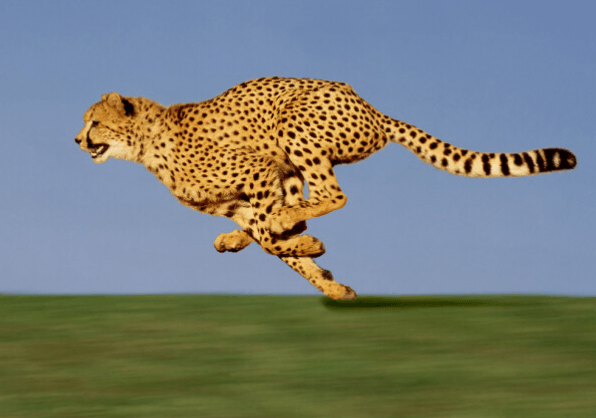
Cheetahs are not just the fastest land animals, they are also among the fastest accelerators in the animal kingdom. They can go from 0 to about 60 mph (97 km/h) in just a few seconds, rivaling the acceleration of high-performance sports cars! This incredible burst of speed is made possible by their flexible spine, long legs, and powerful muscles, which allow their bodies to stretch and contract like a spring during each stride.
An estimated 76% of cheetah range is unprotected land. That means cheetahs often share space with farms and ranches, raising the risk of livestock conflict and retaliation. Community-based solutions, like livestock-guarding dogs, are critical in these areas.
Cheetahs have unusually low genetic diversity, likely from ancient population bottlenecks. Biologists have documented high rates of abnormal sperm and other signs of reduced genetic variation compared to many mammals. This helps explain why conservation breeding and careful population management are so important.
Cheetahs have a specialized dewclaw (the inner claw) and robust carpal pad that help hook or trip fleeing prey during a sprint. Combined with semi-retractable claws (great traction) and that long balancing tail, the dewclaw is part of a precision toolkit for high-speed takedowns. It’s less about brute strength and more about perfect timing.
For centuries, cheetahs were tamed for coursing hunts by royalty in India and the Middle East. They were prized for speed and keen eyesight, riding to the hunt hooded and then released to sprint down game. This historical relationship is unusual among big cats and helped spread cheetah lore across continents.
Unlike lions or tigers, cheetahs can’t roar because of differences in their voice box. Instead, they chirp (a high, bird-like call) to find each other and purr when content, just like house cats. They also hiss and growl when threatened, but that cheerful chirp is their signature sound.
An estimated 76% of cheetah range is unprotected land. That means cheetahs often share space with farms and ranches, raising the risk of livestock conflict and retaliation. Community-based solutions, like livestock-guarding dogs, are critical in these areas.
Cheetahs have unusually low genetic diversity, likely from ancient population bottlenecks. Biologists have documented high rates of abnormal sperm and other signs of reduced genetic variation compared to many mammals. This helps explain why conservation breeding and careful population management are so important.
Cheetahs have a specialized dewclaw (the inner claw) and robust carpal pad that help hook or trip fleeing prey during a sprint. Combined with semi-retractable claws (great traction) and that long balancing tail, the dewclaw is part of a precision toolkit for high-speed takedowns. It’s less about brute strength and more about perfect timing.
For centuries, cheetahs were tamed for coursing hunts by royalty in India and the Middle East. They were prized for speed and keen eyesight, riding to the hunt hooded and then released to sprint down game. This historical relationship is unusual among big cats and helped spread cheetah lore across continents.
Unlike lions or tigers, cheetahs can’t roar because of differences in their voice box. Instead, they chirp (a high, bird-like call) to find each other and purr when content, just like house cats. They also hiss and growl when threatened, but that cheerful chirp is their signature sound.
Unlike lions or tigers, cheetahs can’t roar because of differences in their voice box. Instead, they chirp (a high, bird-like call) to find each other and purr when content, just like house cats. They also hiss and growl when threatened, but that cheerful chirp is their signature sound.

FOLLOW ALONG ON INSTAGRAM

Fast Cheetah Facts is an independent educational website created for learning and awareness. While I strive to provide accurate, science-based information, content may evolve with new research. This site does not collect donations—please contribute only through the official websites of the conservation organizations featured here.